

By The Hive Media
In the rapidly evolving digital landscape of 2026, simply ranking on Google is no longer enough. The advent of sophisticated AI models and generative search experiences has fundamentally reshaped how users discover information and interact with brands online. For businesses aiming to maintain visibility and drive growth, understanding the interplay between traditional SEO and the emerging field of AI Optimization (AIO) is paramount. At The Hive Media, we believe in staying ahead of the curve, combining creativity, technology, and data-driven strategies to ensure your brand not only gets found but gets chosen in this new era of search.
The Evolution of Search: Beyond Traditional SEO
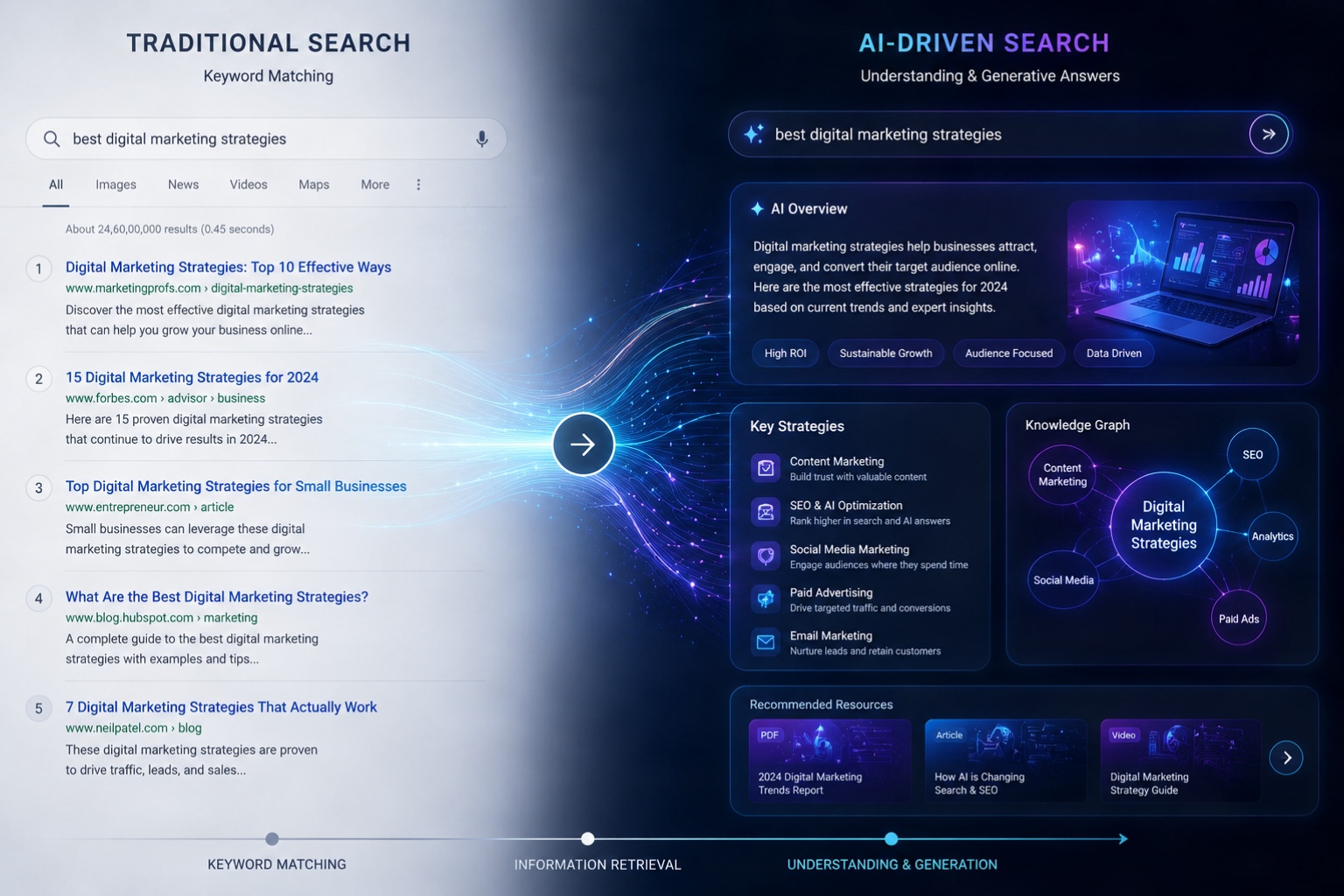
For years, Search Engine Optimization (SEO) focused on making content discoverable on traditional search engine results pages (SERPs). While foundational SEO principles remain crucial, the rise of AI has introduced new dimensions to online visibility. Today, a comprehensive search strategy encompasses four key disciplines :
•SEO (Search Engine Optimization): Optimizing for traditional search engines like Google and Bing, where users type keywords and click on results. Success hinges on keyword relevance and domain authority.
•GEO (Generative Engine Optimization): Optimizing for AI Overviews and generative AI platforms (e.g., Perplexity, Google AI Mode). The goal is to be cited and summarized by AI, often without a direct click to your website.
•AIO (AI Optimization): Preparing your site for AI algorithms and content automation, ensuring platforms like ChatGPT, Gemini, and voice search can understand, pull, and recommend your content. This involves multi-source brand citations via digital PR.
•AEO (Answer Engine Optimization): Optimizing content for direct answers in response engines, featured snippets, and voice search. This requires concise Q&A content and structured data (schema markup).
The challenge for many businesses is that they are still employing 2020 SEO tactics in a 2026 world. Keyword stuffing and basic link building are no longer sufficient when organic listings are increasingly overshadowed by AI Overviews, local packs, and sponsored results .
Key Trends Shaping SEO & AIO in 2026
To thrive in this dynamic environment, brands must adapt to several critical trends :
1.Zero-Click is the Default: A significant portion of searches now end without a click, as AI provides direct answers on the results page. Your content must be structured to be the source AI cites, not just a page it skips.
2.E-E-A-T is Non-Negotiable: Experience, Expertise, Authoritativeness, and Trustworthiness are more critical than ever. Generic AI-generated content struggles to rank. Google and AI systems prioritize real expertise, author credentials, original data, and case studies.
3.Digital PR is the New Link Building: Earning editorial mentions and citations in authoritative publications builds the trust signals that both Google and AI engines value. This goes beyond traditional link-building tactics.
4.Topical Authority Trumps Individual Keywords: Instead of optimizing for isolated keywords, focus on building comprehensive content clusters around specific topics. This signals deep domain expertise to AI systems and search engines.
5.Multimodal Search is Here: Search in 2026 is fully multimodal, blending text, voice, image, and video. Optimizing visuals with descriptive filenames and alt text, and structuring content for voice search, are crucial.
6.Content Freshness Matters: Stale content quickly loses its relevance and citation potential. Regular, quarterly updates to statistics, links, examples, and metadata are essential for maintaining visibility.
7 Core Generative AI SEO Best Practices for Your Brand
To ensure your content is readable, trustworthy, and citable by AI systems, consider these best practices :
1.Answer-First Structure: Lead every page with the direct answer to the primary query within the first 2-3 sentences. AI systems prioritize information at the top of the page for quick answers and summaries.
2.Triple Schema Markup: Implement a combination of FAQPage, Article, and HowTo schema using JSON-LD. This provides structured data that AI models can easily interpret for rich results and direct answers.
3.Strengthen E-E-A-T Signals: Clearly attribute content to named authors with verifiable credentials. Publish original research, proprietary data, and expert quotes. Content without clear authorship is less likely to be cited by LLMs.
4.Build Topical Authority: Develop comprehensive content clusters that address every sub-question related to your core topics. This ensures your site is seen as a complete and authoritative resource.
5.Prioritize Content Freshness: Implement a quarterly review and update cadence for your core pages. Update statistics, refresh examples, and ensure visible timestamps to signal recency to AI platforms.
6.Entity Building: Actively manage your brand’s presence across multiple credible, independent sources like Reddit, LinkedIn, and Wikipedia. Consistent mentions build citation confidence for AI systems.
7.Technical AI Accessibility: Ensure your robots.txt file does not block AI crawlers (e.g., GPTBot, ClaudeBot, PerplexityBot). Consider implementing an llms.txt file to guide AI crawlers to priority pages, and maintain strong Core Web Vitals.
Measuring Success in the AI Search Era
Traditional metrics like organic rankings and click-through rates no longer tell the whole story. In 2026, new KPIs are emerging to measure your generative AI SEO performance :
•AI Citation Frequency: How often your brand is cited across AI responses for target prompts.
•AI Share of Voice: The percentage of relevant AI responses that mention your brand versus competitors.
•Prompt-Level Visibility Rate: The consistency with which your brand is cited for specific priority prompts.
•AI-Referred Sessions: Tracking traffic from ChatGPT, Gemini, Perplexity, and Claude as separate channels in Google Analytics 4.
•Assisted Conversions from AI Traffic: Understanding the downstream conversion contribution of users who arrive via AI citation.
Partner with The Hive Media for Your AI Search Strategy
At The Hive Media, we understand that the future of digital visibility lies in mastering both SEO and AIO. Our expert team is equipped with the knowledge and tools to develop a full-stack strategy that ensures your brand is not only found by traditional search engines but also cited and recommended by the most advanced AI platforms. From technical SEO audits to crafting answer-first content and building digital PR campaigns, we help you navigate this new digital frontier and achieve sustainable growth.
Ready to future-proof your brand? Contact The Hive Media today for a comprehensive AI Search Optimization consultation.